

Like many photographers, when autumn arrives, my excitement naturally shifts toward capturing the vibrant fall foliage. In recent years, different tree species seem to drop their leaves at different times. Providing a prolonged journey through the changing of the colours definitely allows for more reasons to pick up the camera.
The Plan
I packed my walkabout 5-litre backpack with my mechanical Nikkormat FT3, loaded with a fresh roll of Kodak Ektar 100, alongside my digital Nikon Z6 with my 24-30 pancake lens. I always like to have options when my plan is lacking.
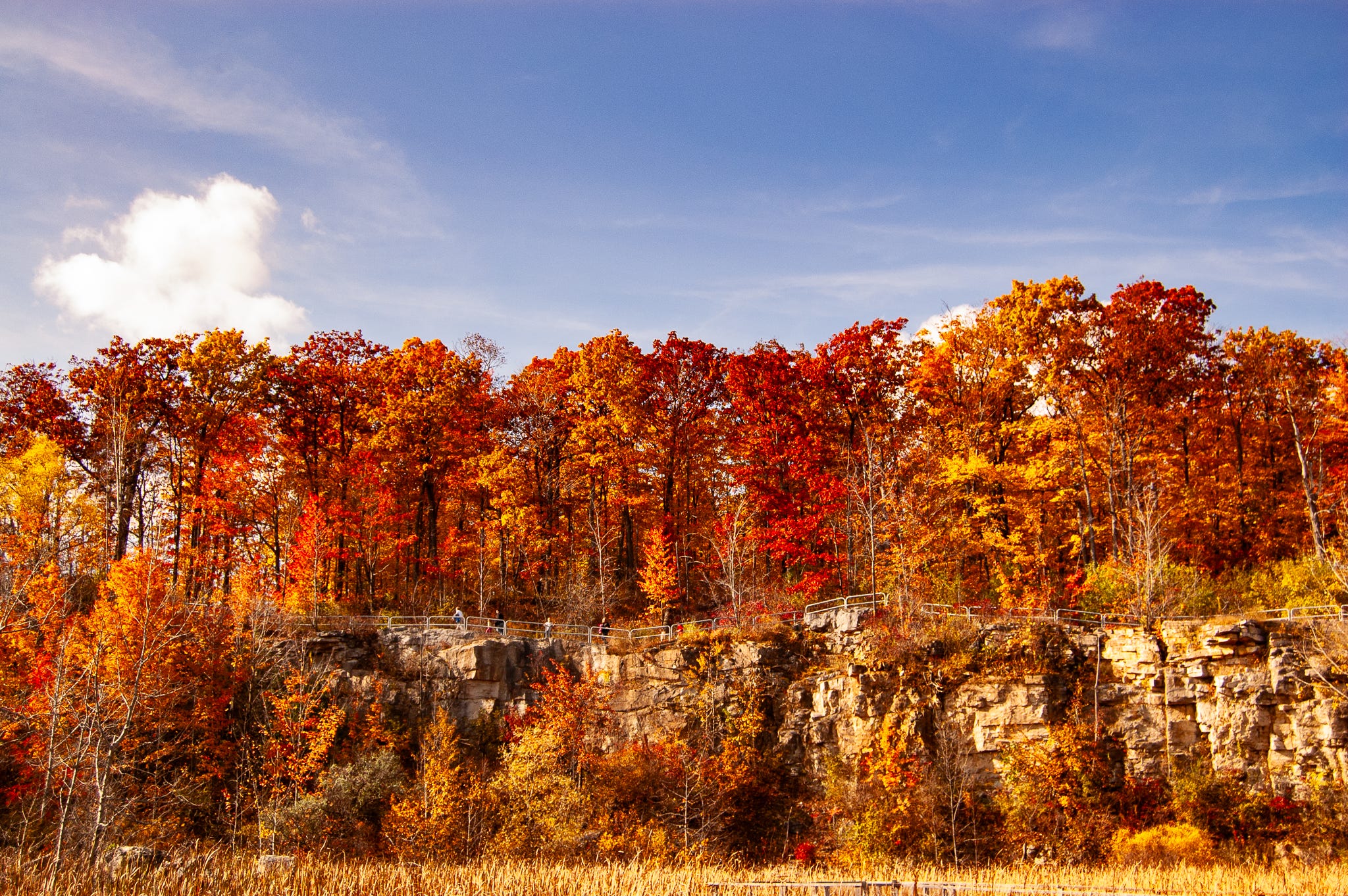
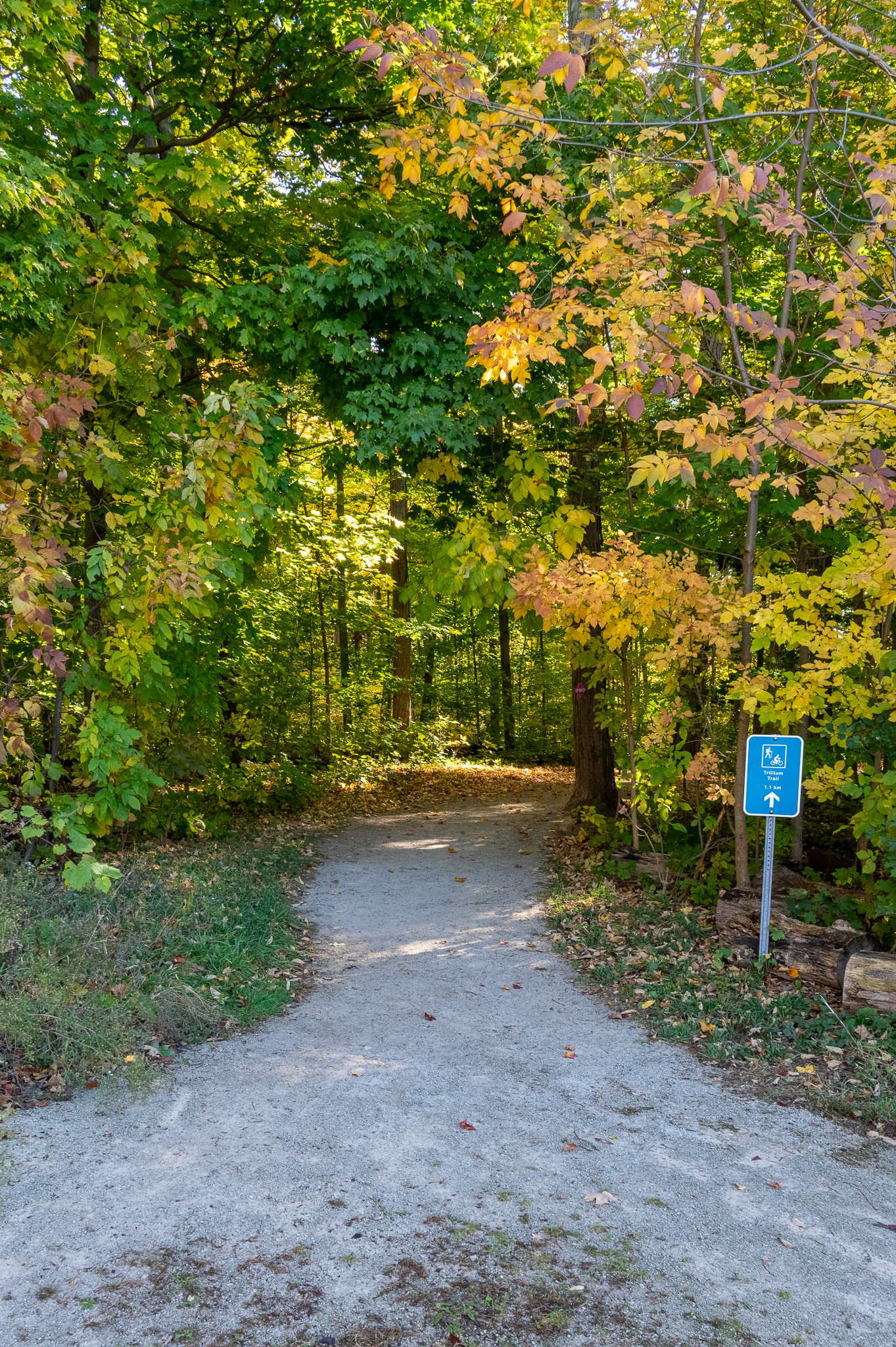
Once at the park, there were many trees well into their fall timetable, but not 100%. One of the big benefits of going to the provincial park is that most trees are left to grow naturally, giving many a beautiful natural shape. Having single trees as well as a full stand provides a great set of options.
Because I visit the park frequently, wandering around gives me a clear sense of which locations I believe will produce the most engaging compositions.
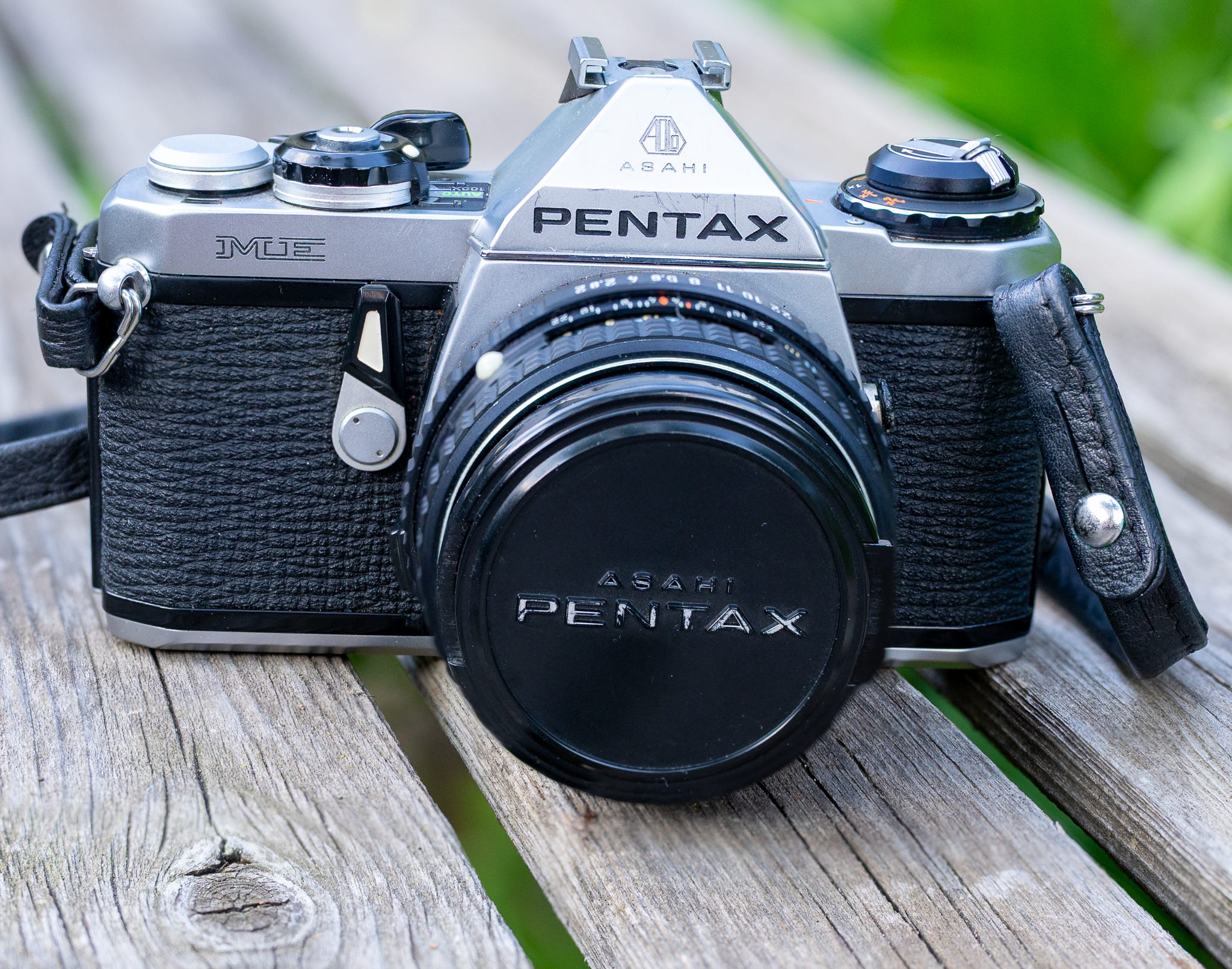
Starting with my Pentax ME with a 50mm lens, what I usually loved about film photography suddenly felt paralyzing.
The Reality
When starting the walk, I found myself looking for the perfect composition. Trying to find the field of colour. However, I was met with a scene of trees at various stages of colour. Seeing a great tree among the other green ones brought out the colour changes even more. This made creating a compelling scene and story a little more difficult.
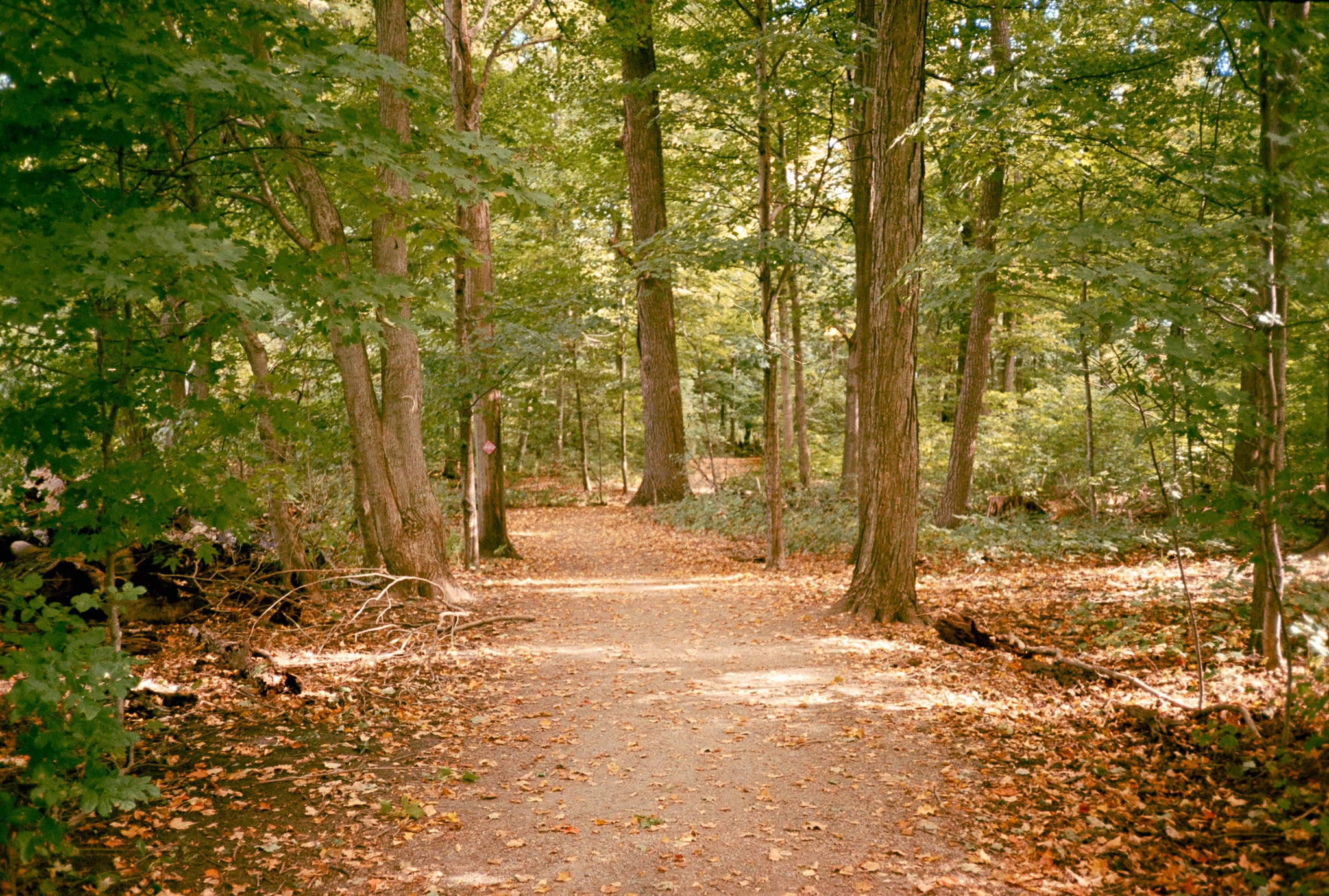
I wanted to capture the scene, but I was fearful of wasting an expensive frame on a composition I wasn’t sure about. That hesitation forced me to put the Nikkormat back in the bag and reach for the Z6 instead. This was a decision that ultimately taught me a surprising lesson about how the seemingly strict discipline of film can actually unlock the playful freedom of digital.
The Realization
Photographing film is far different for me than digital. There are times I think, each photo costs me $3. I realize that this stops me from taking too many chances, testing my creativity, but really stops the ability to “Play”. After about 8 shots of film, I figured, let’s move to my Nikon Z6 and digital.
The Result
I had originally decided not to go down one of the forest trails because the dynamic range was so wide with the sun getting higher in the sky. With digital, once I started to go down one of the trails, I set up the Nikon Z6 in its Auto Exposure (AE) Bracketing feature.
I must admit, in addition to the Focus Shift Shooting (Nikon’s Focus Bracketing), this is one of my favourite features on the Nikon.
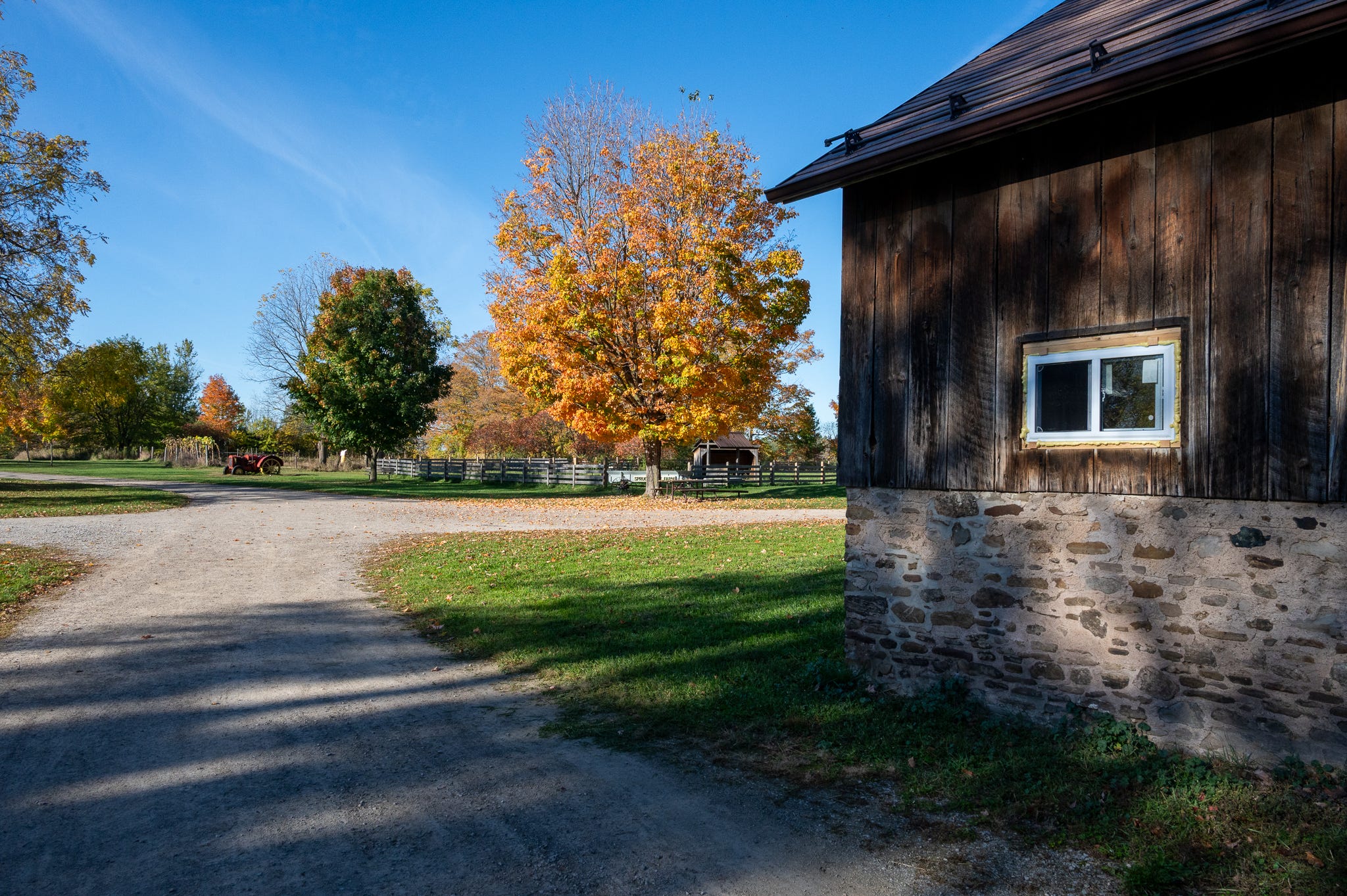
It did not take long for my creativity to start to flow. Trying different compositions, then checking my back screen to see the result. My sense of play came back into focus.
Lessons Learned
1. Digital is the Ultimate Sketchbook for Composition.
I don’t learn if I don’t try.
The ever-increasing cost of film makes it harder to experiment. Even though I do my own negative scanning, the cost of film can come to $15 for the film and $21 for the development alone. Depending on the type of film, it can be around $3 per shot or more.
I am a visual learner and find that I have to take a picture of the scene to start the thought process. How is the light hitting? What is the best exposure, among all the other decisions? With the practically free photos and instant feedback, it is one of the best learning tools.
Digital Mistakes are free !! LOL
The ability to use the features of a digital camera that I could never do on film is a big benefit. Focus stacking, macro, and HDR photo stacking (picture below) are skills that I don’t think I could duplicate today in film.
2. The Philosophy of “Keepers vs. Portfolio shots.”
Not every film shot needs to be a “banger.”
One of my favourite photographers, @grainydays, Jason Kummerfeldt, has a way of looking at his roll of exposures. I call it the “Jason’s School of Classification” :). It goes like this. “Of the [number] of photos we have, [number] Keepers and [number] Portfolio shots”.
My last roll in my Nikkonmat FT3, of the 24 shots on my Kodak UltraMax 400, I had 15 keepers and 7 Portfolio shots. That being said, I am a little liberal in my Film Portfolio shot classification while testing the cameras and my learning experience.
This is for another post, but Digital for me has always been documentary style and a fight for pin-sharpness through the entire frame. Mainly because of the landscape photographers I have followed for years, I am now looking to not be as hard on myself and looking at more of an “art is” style.
As I develop my film style, I also have to learn that photos that take time need to also be ones that I like. Don’t call them “bangers” or expect portfolio shots; also keep ones that I like, make me feel good or bring up great memories.
Sometimes it is the journey that makes the destination so memorable.
3. Patience Over Perfection
Letting Go of the Need for Every Frame to Count
Even when I was taking film growing up in the 70s, and my allowance was scarce, I was far less deliberate in what I was shooting. More memory shots than anything else. It certainly wasn’t until the mid 80’s and getting my first “Semi-pro” Minolta that I started being more worried about good composition. However, I also was not overly concerned about the number of photos I was taking.
As an aside, in ‘92 I took a trip out west to Banff and came back with over 200 shots. I have a print of all the pictures, but many are in an envelope and not in the album. Even the ones I didn’t think had value, I now see interesting compositions. I still have the negatives and plan to scan those and create a project to put them on my site.
I picked up film again because I felt it would slow me down, make me more methodical, mindful and deliberate. Part of the experience is the physical mechanics of my vintage cameras. Each roll and photo requires patience, compositional thought and most of all for me, being present in the moment.
Wrapping Up
The key now is to translate my digital learning into my film workflow. Help me to transform my rushed photo walk exercises into a meditative, second-act craft, with a workflow just as rewarding in the analog images.